
This guide is perfect for anyone looking to master large-scale email campaigns. You’ll learn key strategies, tools, and data-driven tips to automate, personalize, and optimize your emails. Plus, we’ll cover how to stay compliant with global regulations and turn your emails into a powerful growth tool for your brand.
Key Takeaways
Enterprise email marketing uses technology and data to manage large email lists and create personalized experiences that build stronger connections and tell compelling stories.
For success, it’s important to set clear goals, know your audience, segment for better results, and map out customer journeys to deliver relevant content at each stage.
Tracking and improving email performance is key. This includes monitoring key metrics, analyzing campaign results, running A/B tests, and following regulations like GDPR and CAN-SPAM.
What is Enterprise Email Marketing
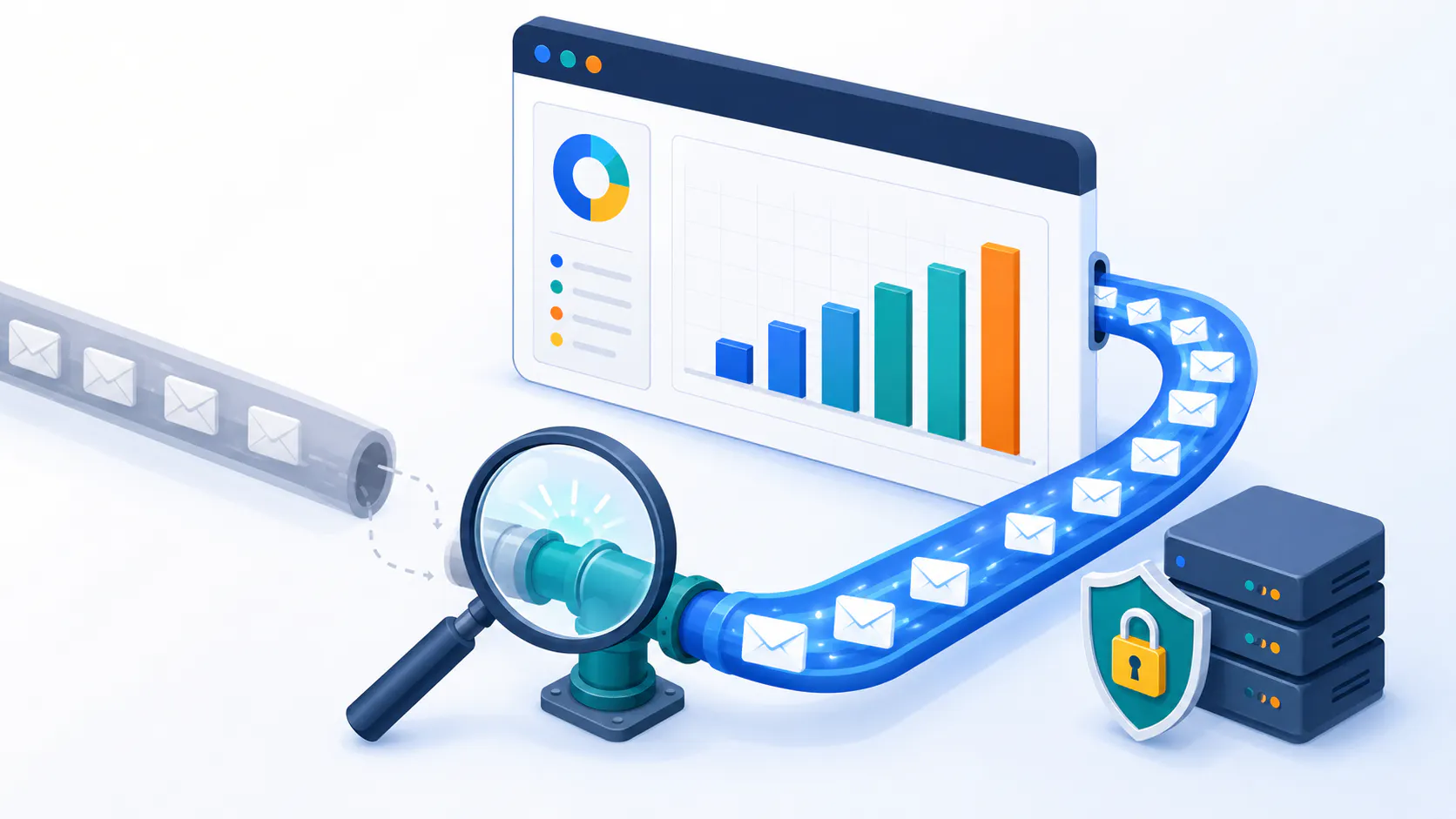
Illustration of Enterprise Email Marketing
The Definition of Enterprise Email Marketing
At its core, enterprise email marketing is a dynamic digital strategy, specifically designed to:
Promote products and services to a broad audience across the expanse of cyberspace
Manage and engage significantly larger subscriber lists
Leverage behavioral segmentation and advanced personalization
Foster stronger customer relationships
Drive impactful digital marketing narratives.
Key Components of an Enterprise Email Strategy
The bedrock of an exceptional enterprise email strategy is constructed with three key elements:
Automation: streamlines communication, ensuring messages reach audiences at the perfect moment
Personalization: captivates subscribers with content that resonates with their unique behaviors and preferences
Integration: seamless integration of these components throughout the customer interaction enhances both reach and impact.
Data is the compass that guides enterprise campaigns, informing the who, what, and when of every communication. It illuminates the path to more relevant and effective campaigns. From segmenting audiences based on detailed criteria to crafting dynamic content that speaks directly to the subscriber.
Leveraging data not only enhances engagement but also fuels predictive analytics. These shape future campaigns, ensuring that each message is a step ahead of the customer’s evolving needs.
Crafting Your Enterprise Email Marketing Strategy
A masterful enterprise email marketing strategy is akin to a well-orchestrated symphony, where each note contributes to an enthralling performance. It begins with:
Setting clear, actionable goals
Understanding the nuances of your target audience
Segmenting your audience to maximize ROI
Mapping the customer journey to ensure every touchpoint is an opportunity to engage and convert.
With the adoption of advanced tools, this strategy becomes an engine driving email marketing success.
Establishing Clear Goals
Concerted marketing efforts in email marketing campaigns start with the establishment of crystal-clear marketing goals. These objectives act as beacons. They guide the email marketing strategy towards tangible outcomes such as lead generation and heightened website traffic.
By setting SMART goals and embracing automation and A/B testing, you can craft personalized emails. Those will resonate with the audience and align with overarching business ambitions.
Understanding Your Target Audience
To captivate and engage, one must first understand the target audience. By crafting buyer personas, you can dive deep into the psyche of their consumers. Embracing the intricacies of their demographics, behaviors, and preferences.
This understanding not only informs personalized communication but also strengthens customer satisfaction. So your emails resonate on a more personal level.
Segmentation For The Maximized Email Marketing Campaigns ROI
Segmentation is the secret ingredient that spices up the ROI of email campaigns. By dividing extensive contact lists into targeted groups based on specific criteria such as behavior or industry, enterprises unlock the potential for more personalized and effective email marketing.
This targeted approach not only enhances engagement but also ensures that marketing efforts are as cost-effective as they are powerful.
Mapping the Customer Journey In Your Email Campaigns
Understanding the customer journey is the key to email campaigns that speak directly to the needs of consumers at each stage.
From awareness to decision-making, each step is an opportunity to deliver tailored content. One that nurtures leads, leverages social proof, and ultimately drives sales.
Through this meticulous mapping, enterprises can ensure that their marketing emails are a guiding light along the path to purchase.
Designing Impactful Marketing Emails for Enterprises
The art of crafting impactful marketing emails lies in the harmonious blend of content and design. With the right elements—visually appealing layouts, compelling subject lines, and potent calls to action—enterprises can transform their marketing emails into captivating narratives that spur recipients into action.
Let’s delve into the components that make an email not just seen, but felt.
Creating Visually Appealing Content
The visual allure of an email can make or break the recipient’s engagement. By optimizing for mobile devices, utilizing high-quality imagery, and embracing personalized design elements, marketers can create visually appealing content that captures the attention of their audience.
A well-structured email with a logical layout and clean design not only pleases the eye but also makes the heart beat a little faster, compelling the recipient towards the desired action – a key component of a successful email marketing campaign.
Writing Subject Lines
The subject line is the gateway to your email’s content. Crafting a compelling one requires a blend of clarity, brevity, and personalization that resonates with the recipient’s interests.
By avoiding spam triggers and optimizing for mobile displays, marketers can ensure their messages not only reach the inbox but also tempt the reader to unveil the treasures within the email.
If you need help with your subject lines, we have just the right tool for you. Try out our New AI-powered subject line generator.
Incorporating Effective Calls to Action
Calls to action are the linchpins of conversion in email marketing. They must be crafted with precision, using language that is both specific and invigorating, and presented in a design that stands out.
By personalizing CTAs and balancing their quantity, marketers can guide recipients through a journey that ends with a satisfying click and a step closer to achieving the campaign’s goals.
Advanced Enterprise Email Marketing Solution for Enterprise Email Marketing
In the quest for email marketing excellence, advanced email marketing tools and platforms are the allies of every enterprise.
With an arsenal of features ranging from intuitive email builders to sophisticated automation and analytics, these tools are the springboard for campaigns that not only reach but resonate with audiences across the globe.
Let’s explore the technological marvels that empower marketers to scale new heights.
Selecting the Right Email Service Provider (ESP)
Choosing the right Email Service Provider (ESP) is a critical decision for any enterprise embarking on email marketing. The ideal ESP acts as the backbone of your campaign’s infrastructure, ensuring that your messages not only reach your audience but also engage them effectively. It’s essential to consider factors such as deliverability rates, scalability, ease of use, and the range of features offered.
An ESP with high deliverability ensures that your emails land in the inbox, not the spam folder. This is crucial for maintaining your sender reputation and achieving your desired open rates. Scalability is another significant consideration; as your business grows, your ESP should be able to handle an increasing volume of emails without a hitch.
The user interface should be intuitive, allowing marketers to create, manage, and track campaigns without requiring extensive technical knowledge. This empowers teams to focus on strategy and content rather than grappling with complex software.
Furthermore, the right ESP such as Sendloop offers a suite of advanced features like automation, segmentation, and personalization tools. Automation streamlines the email marketing process, enabling timely and relevant communication with your audience. Segmentation allows you to tailor your messages to different parts of your audience, increasing the relevance and effectiveness of your campaigns. Personalization goes a step further, making each recipient feel valued and understood, which can significantly boost engagement and conversion rates.
In summary, the right ESP should provide a reliable platform that supports your email marketing goals, offers a user-friendly experience, and includes advanced features that allow for sophisticated campaign management. By carefully evaluating potential ESPs against these criteria, enterprises can select a provider that not only meets their current needs but also supports their future growth.
You can find all the popular ESP’s here.
Choosing between Self-Hosted (In-House) vs. Cloud Service
The choice between self-hosted and cloud-based email services is dictated by a balance of factors, including budgetary considerations, technical expertise, and specific business needs.
Whether seeking the customization and control of in-house solutions or the ease and scalability of cloud services, enterprises must weigh the pros and cons to find the best fit for their evolving email marketing landscape.
Pros and Cons of Self-Hosted Email Marketing Software
Pros of Self-Hosted Email Marketing Software
Complete Control: Users have full control over their email marketing platform, including the ability to customize features, integrations, and workflows to meet specific needs.
Data Ownership: All subscriber data and marketing materials remain on the user’s servers, ensuring complete ownership and control over sensitive information.
Cost-Effectiveness for Large Volume Senders: For businesses that send a high volume of emails, self-hosted solutions can be more cost-effective in the long run as they typically do not charge based on the number of emails sent.
No Subscription Fees: Unlike cloud services, self-hosted platforms usually do not require ongoing subscription fees, which can result in cost savings over time.
Custom Security Measures: Users can implement their own security protocols and compliance measures to meet specific industry standards or regional regulations.
Cons of Self-Hosted Email Marketing Software
Initial Setup and Maintenance: Self-hosted solutions require a significant upfront investment in terms of setup and may require ongoing maintenance, which can be resource-intensive.
Technical Expertise Required: A certain level of technical expertise is necessary to manage and troubleshoot a self-hosted platform, which might necessitate hiring specialized staff.
Scalability Challenges: As the business grows, scaling a self-hosted system can be more complex and costly compared to cloud-based solutions, which are designed to easily scale with business needs.
Deliverability Issues: Self-hosted platforms may face deliverability challenges as they are solely responsible for maintaining their IP reputation, which is crucial for ensuring emails reach the inbox.
Lack of Automatic Updates: Unlike cloud-based services that update automatically, self-hosted platforms require manual updates, which can lead to additional workload and potential security risks if not managed properly.
Pros and Cons of Cloud-Based Email Marketing Services
Pros of Cloud-Based Email Marketing Services
Ease of Use and Accessibility: Cloud-based services are typically user-friendly, with intuitive interfaces that allow marketers to create, manage, and track campaigns with ease. Accessibility from any device with internet connectivity offers flexibility and convenience.
High Deliverability Rates: Reputable cloud-based ESPs often have established relationships with internet service providers (ISPs) and email service providers, ensuring high deliverability rates for your emails.
Scalability: Cloud services can easily scale with your business needs, accommodating growth in email volume without the need for significant changes to your infrastructure.
Cost-Effectiveness: With cloud-based services, you pay for what you use, which can be more cost-effective for businesses with fluctuating email volumes. There’s no need for a large upfront investment in hardware or software.
Automatic Updates and Maintenance: Service providers handle all updates and maintenance, ensuring you always have access to the latest features without additional work.
Enhanced Security and Compliance: Cloud-based ESPs invest heavily in security measures and are typically up-to-date with the latest compliance regulations, providing peace of mind for businesses.
Cons of Cloud-Based Email Marketing Services
Ongoing Costs: While cloud services can be cost-effective, they often operate on a subscription model, which can add up over time, especially for businesses with large email lists.
Limited Customization: Some cloud-based services may offer limited options for customization, which could be a drawback for businesses with highly specific needs.
Data Privacy Concerns: Hosting data with a third-party service provider can raise concerns about data privacy and security, particularly for sensitive information.
Potential for Service Outages: Relying on an external service means that any outages or performance issues on their end can directly impact your email marketing activities.
By weighing these pros and cons, enterprises can determine if a cloud-based email marketing service aligns with their operational requirements and strategic goals.
Leveraging Octeth Email Marketing Software and Other Solutions
Sophisticated solutions like Octeth Email Marketing Software provide a rich suite of tools designed to meet the nuanced demands of enterprise email marketing. Offering advanced audience attribute and activity-based segmentation, multiple email delivery server support, customization and rebranding opportunities, and unlimited usage, these solutions offer the tailored functionalities that enable marketers to create, manage, and analyze campaigns with precision and creativity.
With Octeth, enterprises can take advantage of:
Advanced Audience Attribute and Activity-Based Segmentation: This allows for granular targeting by segmenting audiences not just based on demographic data but also on their behavior and interaction with previous campaigns, leading to highly relevant and targeted messaging.
Multiple Email Delivery Server Support: Octeth supports integration with various email delivery services, providing flexibility and redundancy to ensure high deliverability and optimal performance across different networks and geographies.
Customization and Rebranding Opportunities: Businesses can tailor the look and feel of their email marketing platform to align with their brand identity, providing a consistent experience for both their team and their audience.
Unlimited Usage: Octeth offers unlimited sending capabilities without additional costs, which is ideal for businesses scaling their operations and looking to send a high volume of emails.
Robust Analytics and Reporting: Marketers can track the success of their campaigns with comprehensive analytics and reporting features, enabling data-driven decisions to refine and optimize email strategies.
Dynamic Content Personalization: Create personalized email journeys with dynamic content that adapts to the recipient’s behavior and preferences, enhancing engagement and conversion rates.
Automated Campaign Management: Save time and resources with automation features that manage campaign flows and trigger emails based on specific user actions or milestones.
By integrating these robust features, Octeth Email Marketing Software stands as a formidable ally for enterprises looking to enhance their email marketing initiatives and drive substantial business growth.
Integrating with Other Marketing Channels
The integration of email marketing with other marketing channels forges a unified front that amplifies brand messaging and creates a seamless customer experience.
By leveraging the strengths of each channel, from the directness of email to the interactive nature of social media, enterprises can construct a cohesive strategy that resonates with consumers wherever they are.
Cost Comparison
Evaluating the costs associated with various email marketing platforms requires a discerning eye. Enterprises must consider:
Setup costs
Maintenance expenses
Subscription fees
Potential hidden costs
By conducting a comprehensive cost-benefit analysis, businesses can make informed decisions that align their choice of platform with both their marketing objectives and their financial strategy.
Researching or Buying Email Addresses
Researching or buying email addresses is not recommended. Engaging in such practices can lead to a host of issues that undermine the effectiveness of your email marketing campaigns.
Acquiring email addresses in this manner often results in high spam complaints and hard bounce rates. More importantly, it significantly reduces your campaign’s engagement rates. This, in turn, can lead to long-term email delivery problems. It’s essential to build your email list organically. Make sure that every subscriber has opted in and is genuinely interested in your content.
This approach not only aligns with best practices for email marketing but also fosters a more engaged and responsive audience. This helps to the success and sustainability of your email marketing efforts.
Measuring and Optimizing Email Campaign Performance
The journey of an email campaign doesn’t end at the send button; it’s in the analysis of performance where true growth occurs.
By diligently monitoring KPIs, analyzing campaign data, and employing A/B testing, marketers can fine-tune their approach, optimizing their email efforts for maximum impact and enduring success.
Key Performance Indicators (KPIs) to Monitor
Key Performance Indicators (KPIs) are the navigational stars of email marketing, guiding marketers through the vast sea of campaign data.
Open rates, click-through rates, and conversion rates are among the critical metrics that reveal the health of the email list and the effectiveness of the content, ensuring that every campaign is an opportunity for learning and improvement. These are the 14 most important metrics you should monitor.
The journey of an email campaign doesn’t end at the send button; it’s in the analysis of performance where true growth occurs. However, it’s important to note that traditional open rate Key Performance Indicators (KPIs) is becoming less reliable due to the introduction of “privacy” filters by major email providers such as Gmail, Yahoo, and Apple. These services have started to either block the loading of tracking pixels (a transparent small image used to track email opens) or preload them from proxy servers, which can lead to misleading metrics for email marketers. As a result, while monitoring KPIs, marketers should consider the potential inaccuracies of open rates and focus on other metrics like click-through rates and conversion rates to gain a more accurate understanding of campaign performance.
Analyzing Email Marketing Data
Data analysis in email marketing is akin to alchemy, transforming raw numbers into golden insights that inform future campaigns.
By aligning marketing goals with key metrics and consistently tracking progress, marketers can refine their strategies, ensuring that each email sent is more potent than the last.
Testing for Continuous Improvement
Testing is the pulse check for email campaign vitality, a methodical approach that tests variations and measures their effectiveness.
By experimenting with one element at a time, marketers can glean the insights needed to constantly enhance email performance, ensuring that engagement and conversion rates continue to climb.
Staying Compliant: Navigating Email Marketing Regulations
Navigating the labyrinth of email marketing regulations is a non-negotiable aspect of the digital marketing journey.
By understanding and adhering to international frameworks such as GDPR and CAN-SPAM, enterprises protect not only their legal standing but also the trust and respect of their customers.
Understanding CAN-SPAM Laws and GDPR
Grasping the intricacies of regulations like CAN-SPAM and GDPR is imperative for any email marketer.
These laws set the standards for consent, privacy, and communication, ensuring that the relationship between brand and consumer is built on a foundation of trust and transparency.
Implementing Consent and Privacy Practices
Implementing robust consent and privacy practices is the cornerstone of compliance in email marketing.
By ensuring that every commercial email provides a clear path to opt-out and respects the privacy of recipients, enterprises can build campaigns that honor customer preferences and uphold the integrity of their email marketing efforts.
Maximizing Engagement: Re-activating Subscribers
Rekindling the spark with inactive subscribers is a crucial aspect of maximizing engagement and preserving the vitality of an email list.
Through strategic re-engagement campaigns that leverage behavioral data and personalized content, enterprises can breathe new life into dormant relationships, turning inactivity into opportunity.
Identifying and Segmenting Inactive Users
Identifying inactive subscribers is the first step toward reactivation. By segmenting users who have not engaged within a specific timeframe, marketers can tailor their re-engagement strategies to awaken the interest of those who have drifted away, setting the stage for a renewed dialogue.
Crafting Personalized Re-engagement Campaigns
Crafting personalized re-engagement campaigns is an art that requires a deep understanding of past customer interactions.
By using dynamic content and special promotions tailored to inactive segments, enterprises can create campaigns that resonate on a personal level, enticing subscribers back into the fold.
Monitoring Results and Adjusting Tactics
Monitoring the results of re-engagement campaigns is essential for understanding their effectiveness. By analyzing opens, clicks, and conversions, marketers can adjust their tactics to ensure that their efforts to awaken subscribers are not only noticed but also inspire the desired action.
Leveraging Customer Feedback for Enhanced Email Marketing
Leveraging feedback is the key to fine-tuning email marketing strategies and deepening customer relationships.
Through active listening and the application of insights gleaned from customer interactions, enterprises can enhance their campaigns, ensuring each email resonates more profoundly with the audience.
Collecting Valuable Insights
Collecting valuable insights from customers is a strategic move that can significantly enhance the relevancy and impact of email marketing campaigns.
By embedding surveys and feedback mechanisms directly into emails, marketers can gather actionable data that informs content creation and campaign optimization.
Applying Feedback to Refine Campaigns
Applying feedback to refine email campaigns is a process of continuous improvement.
By segmenting audiences according to their responses and personalizing content based on their preferences, marketers can create more effective emails that not only engage but also delight their recipients.
Fostering Stronger Customer Relationships
Fostering stronger relationships through feedback is a testament to an enterprise’s commitment to its audience.
By demonstrating that customer opinions are not just heard but acted upon, businesses can elevate the trust and loyalty of their subscribers, ensuring a solid foundation for long-term engagement.
Summary
In conclusion, unlocking success in enterprise email marketing is a multifaceted endeavor that spans from understanding the importance of data and crafting a robust strategy to designing impactful emails and utilizing advanced tools.
By measuring and optimizing for performance, staying compliant with regulations, re-activating subscribers, and leveraging feedback, enterprises can construct email campaigns that are not just successful but also resonate with their intended audience.
Let these insights inspire your next email marketing journey, and watch as your campaigns soar to new heights of engagement and effectiveness.
Frequently Asked Questions
How is enterprise email marketing different from traditional methods? Enterprise email marketing differs by managing larger email volumes, using advanced technology and data for personalized experiences, and targeting extensive contact lists through smart segmentation. It’s all about handling bigger, more personalized campaigns for a wider audience. How does segmentation help enterprise email marketing succeed? Segmentation helps increase ROI by tailoring campaigns to specific groups, boosting engagement and conversions. It leads to better overall results for your email marketing. Why is it important to integrate email marketing with other channels? Integrating email marketing with other channels creates a seamless customer experience, strengthens branding, and boosts campaign effectiveness, making your marketing efforts more impactful. How can A/B testing improve email campaigns? A/B testing improves campaigns by trying out different email elements to see which version performs better. This helps continuously boost engagement and effectiveness. Happy testing! What role does feedback play in email marketing? Customer feedback helps marketers understand satisfaction and areas to improve, enabling them to refine campaigns and create more personalized content. It’s essential for growing and succeeding in email marketing.