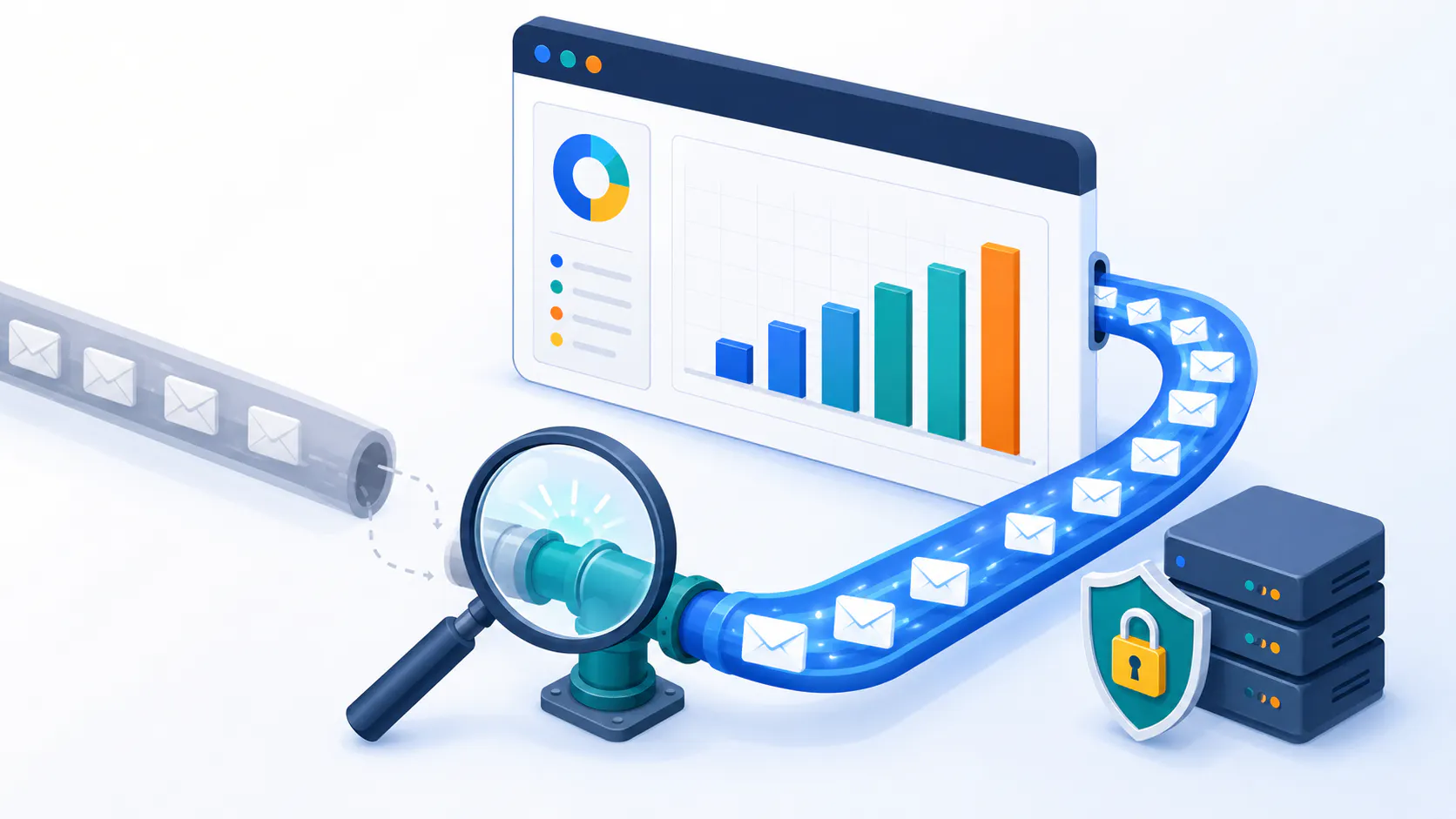

Ready to take your email marketing to the next level? In this post, we’ll guide you through 14 essential email marketing metrics to track, helping you uncover what works and optimize your strategy for better results.
Key Takeaways
Email metrics like open rates and conversion rates are the way to measure campaign performance and improve.
Bounce rate, unsubscribe rate and overall ROI are the metrics to track to see how effective your email is and how engaged your audience is.
Best practices like segmentation, personalization and A/B testing can make your email marketing so much better and optimize your campaigns.
What are Email Marketing Metrics?
Email marketing metrics are data points that measure the performance of email campaigns. These metrics show how recipients interact with emails, open rates, click-through rates, conversion rates and more. By tracking email marketing metrics you can see what works and what doesn’t in your email marketing, make data driven decisions and optimize your campaigns for better results.
By tracking these metrics you can tweak your strategy so each email campaign is better than the last. For example, tracking click-through rates (CTR) will show you how engaging your content is, conversion rates will show you how well your emails are driving desired actions. By using these insights you can improve your email marketing and get better engagement and higher ROI.
An overview of email marketing metrics.
Why Track Email Marketing Metrics?
Tracking email marketing metrics is important for businesses to measure their email marketing campaign success and make informed decisions to improve their strategy. By tracking key email marketing metrics you can:
Test Subject Lines and Email Content: See what subjects and content work with your audience so you can create better emails.
Measure Campaigns Against Conversions and Revenue: Conversion rates and revenue per email will show you how well your campaigns are performing financially.
Find Out What’s Not Working in Email Marketing: By tracking metrics you can see what’s not working and adjust.
Optimize for Open Rates, Click-Through Rates and Conversion Rates: Continuous tracking and tweaking will get you big improvements in these areas.
Improve Customer Engagement and Experience: By tailoring your emails based on metric insights your audience will find your emails relevant and engaging.
By focusing on this you can create better email marketing campaigns that get better results and build stronger customer relationships.
Importance of Email Marketing Metrics
Tracking email marketing metrics is not just about collecting data; it’s about measuring actual success and getting insights for future growth. The list growth rate will show you how well you’re doing at attracting and retaining new subscribers. Tracking sharing and forwarding rates will show you what content resonates most with your subscribers and will get more engagement and new leads.
Tracking engagement data regularly will show you trends and allow you to adjust your strategy. Focusing on metrics will allow you to connect with your audience in a personal way, get better results and stronger customer relationships.
This will show you both positive and negative metrics so you don’t misinterpret and get a complete picture of your email marketing.
Key Email Marketing Metrics to Track
Most important email marketing metrics to track for effective campaigns.
Tracking key metrics is important to understand and improve your email marketing campaigns. This section will cover the key email marketing metrics every marketer should track. The metrics include open rate, click-through rate, conversion rate, bounce rate. Other important ones are unsubscribe rate, spam complaints rate, list growth rate, click-to-open rate (CTOR) and overall ROI.
Each of these metrics will give you insights into different parts of your campaigns so you can see what’s working and what’s not. By getting to know these metrics you can improve your email marketing and get better results.
Open Rate
Open rate is one of the most important metrics in email marketing. It’s the percentage of delivered emails that were opened by the recipient, so you can see how good your subject lines are and how interested your audience is in your emails. A high open rate means your subject lines are working and your audience is looking forward to your emails. A good open rate is usually 20-22%. This is the benchmark for good email performance.
To calculate open rate use the formula: (Number of emails opened / Total emails sent) x 100, excluding bounces. To improve your open rate try different titles, personalization and adjust your sending times.
But note that new privacy features like Apple Mail can affect the accuracy of open rate tracking. For Apple Mail users, Mail Privacy Protection will make open rate inflated so this metric is not reliable to measure audience engagement.
Click-Through Rate (CTR)
Click through rate (CTR) is a critical metric that measures the percentage of recipients who clicked on one or more links within your email. It provides a clear indication of how engaging and relevant your email content is to your audience. To calculate CTR, you need to divide the number of clicks by the number of delivered emails. Then, multiply the result by 100. This metric is essential for quickly assessing the performance of your emails and tracking changes over time.
A good CTR indicates that your email content is effectively driving recipients to take action, such as visiting your website or completing a purchase. Most emails have an average click-through rate that is just above 2%. This statistic highlights the general effectiveness of email marketing.
Monitoring CTR helps identify which content and calls-to-action resonate most with your audience, allowing for adjustments to improve engagement.
Conversion Rate
Conversion rate is the percentage of people who completed a desired action after clicking on a link in your email. This could be anything from buying to signing up for a webinar. Conversion rate is a key metric as it directly shows how well your campaigns are generating leads and sales. To calculate conversion rate use the formula: (Number of conversions / Number of emails delivered) x 100.
To improve your conversion rate you need to optimize your call-to-action (CTA) and make sure the content of your email matches the expectation set by the title. A well designed CTA can boost conversion rate by guiding recipients on what to do next.
About 45% of brands track email down to conversions, so this metric is important to measure campaign success.
Bounce Rate
Bounce rate is how many emails didn’t reach the recipient’s inbox. It’s a percentage. There are two types of bounces: soft bounces which are temporary like a full inbox and hard bounces which are permanent like invalid email addresses. A high bounce rate can harm your sender reputation with email service providers and reduce deliverability.
To calculate bounce rate use the formula: (Number of bounced emails / Number of emails sent) x 100. Remove hard bounced addresses from your email list and understand the causes of bounces to maintain a healthy email list and improve bounce rate.
This proactive approach will get your emails to more recipients and overall campaign performance.
Unsubscribe Rate
Unsubscribe rate is the percentage of people who opted out of your email list. This happens after they receive an email. This metric is an indirect measure of your content relevance and email list health. To calculate unsubscribe rate, first divide the number of unsubscribes by total number of delivered emails. Then multiply by 100. Ideally you should aim to keep your unsubscribe rate below 1-2%.
Monitoring the unsubscribe rate will help you see how your content is resonating with your audience and where the issues are. To keep this rate low try testing different email frequencies and segmenting your list to better target your audience.
Recognising and addressing negative metrics including unsubscribe rate will give you valuable insights into your email marketing performance.
Spam Complaint Rate
Spam complaint rate is how many people reported your email as spam. It’s a percentage. This metric is important for email quality and technical issues. To calculate the spam complaint rate, first divide the number of spam complaints by total number of emails sent. Then multiply by 100. A spam complaint rate above 0.1% is a red flag and needs attention ASAP.
Monitoring the spam complaint rate will help you identify issues that can harm your sender reputation. To keep this rate low make sure to have a visible unsubscribe link, use double opt-in and avoid spammy subject lines. High spam complaint rate can get your email service provider to block your account so it’s important to keep it low.
List Growth Rate
List growth rate is the rate at which your email list is growing. The formula is: (Monthly new subscribers – Monthly churned subscribers). Divide this by list size and multiply by 100. A positive list growth rate means your email program is growing and attracting new subscribers.
While sudden growth in list growth can be exciting, sustainable growth is more important as it means a loyal and engaged audience. To maintain a healthy list growth rate attract new subscribers while minimising churn by regularly removing inactive or unengaged subscribers.
A growth rate of 1-2% per month is generally good.
Deliverability Rate
Deliverability rate is the percentage of emails that land in recipients’ inboxes and not in spam or junk folders. 99% is considered good for email marketing. To calculate deliverability rate use the formula: (Non-junked emails delivered / Emails delivered) x 100.
To get a high deliverability rate you need to have a clean and healthy email list and your content needs to resonate with your target audience. If your deliverability rate is below 97% it’s time to audit your email address collection practices and improve your sender reputation.
Regularly monitoring and improving your deliverability rate is important to make sure your emails reach the right people.
Click-to-Open Rate (CTOR)
Click-to-Open Rate (CTOR) measures the performance of your email content by comparing the number of clicks to the number of opens. Unlike CTR which measures clicks based on total emails delivered, CTOR isolates the performance of the email content itself from the subject line or preheader. To calculate CTOR use the formula: (Unique Clicks / Unique Opens) x 100.
CTOR usually falls between 10-15% but can vary by industry and campaign type. Compare your CTOR to past campaigns to see improvement and optimise your content for better engagement.
This metric is important to see how well your email’s copy, design and call-to-action is performing.
Overall ROI
Overall ROI in email marketing means the return on investment a business gets from its email efforts. It gives you insights into the financial performance of your campaigns. To calculate overall ROI use the formula: (Total Revenue – Cost) / Cost x 100. Email marketing has a high ROI compared to other marketing channels with estimates ranging from $36 to $44 for every $1 spent depending on the industry.
Email marketing ROI helps to justify budgets for resources and projects and guide future budget allocations. Setting benchmarks based on historical performance and industry standards helps to track progress and improve your email strategy.
Understanding individual email performance and revenue per email will further enhance your ROI measurement.
Email Marketing Metrics Overview
To provide a quick reference, here’s a table summarizing the key metrics and their significance:
MetricDescriptionImportanceOpen RatePercentage of delivered emails that are opened by recipientsIndicates the effectiveness of your subject line and overall email interestClick-Through Rate (CTR)Percentage of recipients who clicked on links within the emailMeasures engagement and the relevance of email contentConversion RatePercentage of recipients who completed a desired action after clickingDirectly shows the effectiveness of emails in driving desired actions like purchases or sign-upsBounce RatePercentage of emails that couldn’t be delivered to the recipient’s inboxAffects sender reputation and deliverability; needs to be minimized for better campaign performanceUnsubscribe RatePercentage of recipients who opted out of the email listReflects content relevance and list health; should be kept below 1-2%Spam Complaint RatePercentage of recipients who marked the email as spamCritical for maintaining a good sender reputation; should stay below 0.1%List Growth RateRate at which the email list is expandingIndicates how well the email program is attracting and retaining new subscribersDeliverability RatePercentage of emails that land in the inbox rather than spam/junk foldersEssential for ensuring emails reach the intended audienceClick-to-Open Rate (CTOR)Percentage of clicks relative to the number of opensEvaluates the effectiveness of email content and calls-to-actionOverall ROIReturn on investment from email marketing effortsJustifies budget allocations and measures financial performance
Advanced Email Marketing Metrics
Advanced metrics for deeper insights.
Advanced email marketing metrics allows marketers to dig deeper into campaign performance, beyond basic metrics. These metrics gives you a more detailed understanding of user behavior and help you to improve future email campaigns. Implement best practices and use advanced analytics tools to supercharge your email marketing metrics.
We’ll look into advanced metrics like engagement over time, mobile open rate, revenue per email and subscriber lifetime value (LTV). Each of these metrics gives you different insights to inform your email strategy and get better results.
Engagement Over Time
Analyzing recipient engagement over different time periods is important to optimise your email marketing. Understanding engagement patterns over time allows marketers to optimise their email sending and set specific engagement goals. For example, increasing open rate by 5% in 6 months is a clear target to work towards.
Comparing engagement metrics before and after implementing new strategies will help you measure the impact. Regular review of overall engagement trends will allow you to adjust future email marketing strategies accordingly.
Mobile Open Rate
Mobile open rate is the number of emails opened on mobile devices. It’s a percentage. This metric means you need to prioritise mobile friendly email design which directly impacts user experience. To calculate mobile open rate divide the number of opens on mobile by total opens.
Mobile click rates are lower than desktop click rates due to user behavior and Mail Privacy Protection (MPP). MPP can block opens and device usage and can skew mobile open rates.
Make sure your emails are mobile friendly to improve engagement and reduce bounce rates.
Revenue per Email
Revenue per email is the direct revenue generated from each email sent. This metric helps you to evaluate the financial performance of your campaigns and guide future budget allocations. To calculate revenue per email use the formula: Revenue per Email = Total Revenue from the Campaign / Total Emails Sent.
Benchmarks for revenue per email can vary greatly depending on the industry, audience and type of campaign but a common goal is $0.10 to $0.30 per email. Analyzing this metric will help marketers to identify revenue driving campaigns and make informed decisions for future optimisation.
Subscriber Lifetime Value (LTV)
Subscriber lifetime value (LTV) is the total value of a subscriber to your business. It’s the total value they will generate throughout their lifetime. This metric is important to understand the long term value of your email subscribers and make strategic investment decisions. To calculate LTV use the formula: LTV = (Average Order Value x Average Order Frequency) x Average Customer Lifespan.
Breaking down LTV will give you a clear picture of each subscriber’s value. Setting benchmarks based on historical data and competitor analysis will ensure your LTV calculations are accurate and actionable.
Measuring LTV allows you to invest more in marketing and subscriber retention.
Additional Email Marketing Metrics
Besides the common email metrics, there are other metrics businesses can track to get more insight into their email marketing.
Email Sharing/Forwarding Rate
Email sharing/forwarding rate is the percentage of email recipients who share or forward an email to others. This metric will help you understand the virality of your email content and identify opportunities to encourage sharing and forwarding. A high sharing/forwarding rate means your content is valuable and engaging enough for recipients to share with their network.
To calculate email sharing/forwarding rate use the formula: (Number of shares or forwards / Number of delivered emails) x 100. To encourage sharing include social sharing buttons and create content that’s highly relevant and shareable.
Email Errors or Error Rate
Email errors or error rate is the percentage of emails that have errors such as broken links, formatting issues or incorrect content. This metric will help you identify areas to improve in your email marketing strategy and ensure your emails are delivered correctly. High error rates can harm your brand reputation and reduce the effectiveness of your campaigns.
To calculate email error rate use the formula: (Number of emails with errors / Total number of emails sent) x 100. Test your emails before you send and use tools to check for errors to keep your error rate low.
By tracking these other email metrics you can get a better understanding of your email marketing and make data driven decisions to optimise your campaigns better.
Analyzing Email Performance
Analyzing email performance through various metrics.
Analyzing email performance is a key part of optimising your strategy. Email metrics provide a framework to measure campaign success and identify areas to improve. Tracking open rates, click through rates and conversions will give you insight into how well you’re meeting your marketing objectives.
Using analytics tools with real-time reporting will allow you to make changes based on performance data and increase overall campaign effectiveness. Integrating your email platform with web analytics will collect data from multiple marketing channels and give you a full view of campaign performance.
Segmentation and Personalization
Segmentation and personalization are key to any successful email strategy. Segmenting your email list by demographics, behaviour or interests will allow you to create content that resonates with specific audience subgroups. This will increase relevance and engagement and therefore open and click through rates.
Segmentation involves analysing performance metrics by audience segments to get valuable insights into different subscriber behaviour. Create content and offers for specific segments based on their engagement and preferences so your emails are more effective and better received by your audience.
For a comprehensive guide on how to master email list segmentation, visit Octeth’s expert tips.
A/B Testing
A/B testing or split testing is a way to compare two versions of an email to see which one performs better. This testing involves changing one element at a time, such as subject line, email content, CTA placement or layout to measure the impact on click through rates and engagement.
Testing different elements systematically will allow marketers to optimise their campaigns based on data and get better results from future campaigns. Having a control variable in A/B tests will give you an accurate measurement of the tested element’s impact and will increase open rates, click through rates and overall campaign effectiveness.
Leveraging Analytics Tools
Leveraging analytics tools is essential for understanding audience behavior and improving email campaign performance. Email service providers like Octeth and Sendloop can automate data gathering for email metrics, streamlining the analysis process and providing actionable insights.
Successful email marketers balance positive metrics with negative ones to identify opportunities for improvement. Advanced analytics tools can help create, personalize, and optimize email campaigns, enhancing overall marketing effectiveness. Manual tracking of email metrics can also be beneficial, helping an email marketer determine optimal send times.
Common Pitfalls in Email Marketing Metrics
Even experienced email marketer can fall into common pitfalls when tracking and interpreting email marketing metrics. One of the biggest mistakes is over-reliance on open rates, which can be misleading due to privacy protections and email client settings that block tracking pixels. Another pitfall is ignoring negative metrics such as unsubscribe and spam complaint rates, which provide crucial insights into potential issues with your email content or targeting.
Misinterpreting data can also lead to misguided decisions in email marketing. It’s essential to understand the context of metrics and ensure data-driven decisions to avoid misinterpretation. Other common pitfalls include neglecting segmentation, ignoring mobile optimization, and inconsistent sending frequency, all of which can negatively impact your email marketing effectiveness.
Over-Reliance on Open Rates
Relying on open rates alone will mislead marketers about email engagement. Apple and Google’s privacy protections have made traditional metrics less reliable as they can inflate open rates. Many email client settings also block tracking pixels so data is harder to interpret.
To get a better understanding of email performance marketers should consider alternative metrics like engagement rates and click through rates. These metrics will give you a clearer picture of how recipients are interacting with your emails and more actionable insights to improve your email marketing.
Ignoring Negative Metrics
Ignoring negative metrics like unsubscribe and spam complaint rates will give you an incomplete view of your email marketing strategy. High unsubscribe rates means content relevancy issues, the email may not be relevant to the subscriber or their expectations. Monitoring these metrics regularly will allow you to make the necessary adjustments to improve engagement and deliverability.
List cleaning, with tools such as Cleanify.io will reduce bounce rates and lower the chances of being marked as spam. By recognising negative metrics email marketers can address content or targeting issues and improve overall campaign performance.
Misinterpreting Data
Misinterpreting data will lead to bad decisions in email marketing. Not understanding the context of the metrics will mean your strategy won’t align with the actual performance insights. For example a high open rate doesn’t necessarily mean high engagement if the content doesn’t resonate with the audience.
Make data driven decisions to avoid misinterpretation of metrics. Regular analysis and understanding of the context behind the numbers will allow you to make informed changes to your email marketing strategy and get better results.
Other Common Pitfalls
Other common email marketing mistakes include not segmenting, not mobile optimising and not sending consistently. Not segmenting will mean generic messages that don’t resonate with specific subgroups of your audience and will reduce engagement. Not mobile optimising will mean poor user experience as many recipients read emails on their phones.
Not checking deliverability and not A/B testing your campaigns will also impact email marketing. Regularly cleaning your email list and sending consistently is key to avoiding these mistakes and improving your email marketing.
Best Practices for Improving Email Metrics
Best practices for improving your metrics.
Best practices are key to improving email metrics and business goals. Make content relevant, test send times and use strong CTAs with incentives to improve click through rates. Conversion optimisation, A/B testing and testing CTAs will improve ROI in email marketing.
Monitor your key performance metrics and make data driven changes to improve your email marketing. Follow these best practices to get better results.
Segment Your Audience
Segmenting your audience is a best practice in email marketing. Segmenting your email list by demographics, behaviour or interests will allow you to send messages to specific subgroups of your audience. This will increase relevance and engagement and higher open and click through rates.
Segmenting involves monitoring performance by audience segments, giving you valuable insights into different subscriber behaviour. Tailoring content and offers to specific segments will mean your emails will be more effective and better received by your audience.
To learn how to master email list segmentation, continue reading here.
Personalize Content
Personalising your email content is another best practice. Use subscriber data to personalise your emails, including the subject line, greeting and content. Personalised emails will resonate more with the recipient and drive engagement and conversions.
Ways to personalise emails include using the recipient’s name, tailoring content to their interests and sending personalised offers based on their past behaviour. This will help you build a stronger relationship with your audience and improve overall campaign performance.
For those looking to take personalization to the next level, consider exploring dynamic content personalization, which allows you to tailor content based on real-time data and user behavior, offering a more advanced approach to engaging your audience.
Optimize for Mobile Devices
Many users read emails on their phones so mobile optimising your emails is key. Make sure your emails are mobile friendly by using responsive design and concise content. Mobile optimised will improve engagement and reduce bounce rates.
To make your emails mobile friendly use a single column layout, large fonts and clear CTAs that are tapable. Test your emails on different devices to make sure they look and work on all screens.
Crafting Compelling Subject Lines
Strong headlines are key to increasing open rates. Good subject lines will entice the recipient to open your email by using specifics, personalisation and urgency. For example using the recipient’s name in the subject line will increase relevance and engagement.
Subject lines with urgency or limited time offers will increase open rates. Testing different subject lines and monitoring performance will tell you what works for your audience.For those looking to craft compelling subject lines, consider using an AI Email Subject Line Generator to help create engaging and effective subject lines that capture your audience’s attention.
Optimizing Call-to-Action (CTA)
Optimising your call-to-action (CTA) is key to getting subscribers to take action. CTA’s should be above the fold and use action oriented language to get clicks. Clear and visually distinct CTA’s will increase click through rates.
To optimise your CTA’s use contrasting colours, concise and compelling text and strategic placement in your email. Test different CTA’s and monitor performance to see what works best.
A/B Test Your Campaigns
A/B testing involves sending different versions of an email to different segments of your audience to see which one performs better. Common elements tested in A/B emails are subject lines, content, CTA’s, images and delivery time.
A/B testing will give you quantifiable results that will increase open rates, click through rates and overall campaign performance. Make sure you have a control variable in your A/B tests so you can measure the impact.
Maintaining List Hygiene
Regularly cleaning your email list, with tools such as Cleanify.io will reduce bounce rates and improve overall deliverability. Regularly updating your email list will prevent high bounce rates and improve deliverability.
List hygiene involves removing inactive subscribers, correcting invalid email addresses and making sure your list is up to date. This proactive approach will improve your campaign performance and protect your sender reputation. Learn more about it here.
Monitor and Improve Deliverability
Monitoring and improving deliverability is key to getting your emails into the inbox. Check your sender reputation, authentication methods (SPF, DKIM) and bounce rates regularly. Improving deliverability will get your emails into the inbox and improve overall campaign performance.
Ways to improve deliverability are using a reputable email service provider, list hygiene and avoiding spammy content, which causes spam complaints. Regular testing and monitoring will help you identify and fix deliverability issues before they affect your campaigns.
Analyze Metrics Regularly
Regularly monitoring your key metrics is key to optimising your email marketing. Reviewing open rate, click through rate and conversions regularly will help you spot trends and areas for improvement.
By monitoring your metrics regularly you can make adjustments in time to improve and get better results. This data driven approach will help you optimise your campaigns for maximum performance.
Summary
In summary tracking and monitoring your email marketing metrics is key to optimising your email marketing and getting better results. From basic metrics like open rate, click through rate and conversion rates to advanced metrics like engagement over time and subscriber lifetime value each metric will give you different insights into your email campaigns.
By avoiding the common mistakes and implementing best practices like segmentation, personalisation and A/B testing you can continually improve your email marketing. Regularly monitoring your metrics will ensure your strategies are data driven and optimised for success. Apply these to your email campaigns and get better engagement and conversions.
For further insights into improving your email marketing strategy and ensuring high deliverability, explore the following resources:
Master Email Deliverability and Authentication: Discover best practices and techniques to enhance your email deliverability and maintain a strong sender reputation.
Email Marketing Strategies and Best Practices: Learn effective strategies and best practices to optimize your email marketing campaigns and drive better results.
These resources will provide you with actionable insights and practical tips to elevate your email marketing efforts!
Frequently Asked Questions
Why is it important to track email marketing metrics? It is essential to track email marketing metrics to evaluate campaign effectiveness and gain insights that inform data-driven improvements, ultimately enhancing engagement and conversions. What are the most important email marketing metrics to track? To effectively measure your email marketing success, focus on tracking open rates, click-through rates, conversion rates, and unsubscribe rates. These metrics provide valuable insights into engagement and overall campaign performance. How can I improve my email open rates? Improving your email open rates can be achieved by experimenting with varied subject lines, personalizing content, and optimizing sending times. Focus on making your emails relevant and anticipated by your audience for better engagement. What is the difference between CTR and CTOR? CTR measures the percentage of email recipients who click links based on total emails delivered, while CTOR evaluates the effectiveness of your content by comparing clicks to the number of opens. Understanding the distinction helps in optimizing email campaign performance. How can I reduce my email bounce rate? Maintaining a clean and healthy email list is essential to reducing your bounce rate; regularly remove hard bounced addresses and understand the underlying causes of bounces to improve your email deliverability. How can I minimize spam complaints in my email marketing? Minimizing spam complaints is crucial for maintaining a good sender reputation and ensuring your emails reach the recipient’s inbox. To reduce spam complaints, always use a clear and visible unsubscribe link to allow users to opt-out easily. Implement a double opt-in process to confirm subscribers’ consent and avoid using deceptive subject lines or spammy content. Regularly monitor your spam complaint rate and make necessary adjustments to your email strategy to keep this rate low.